

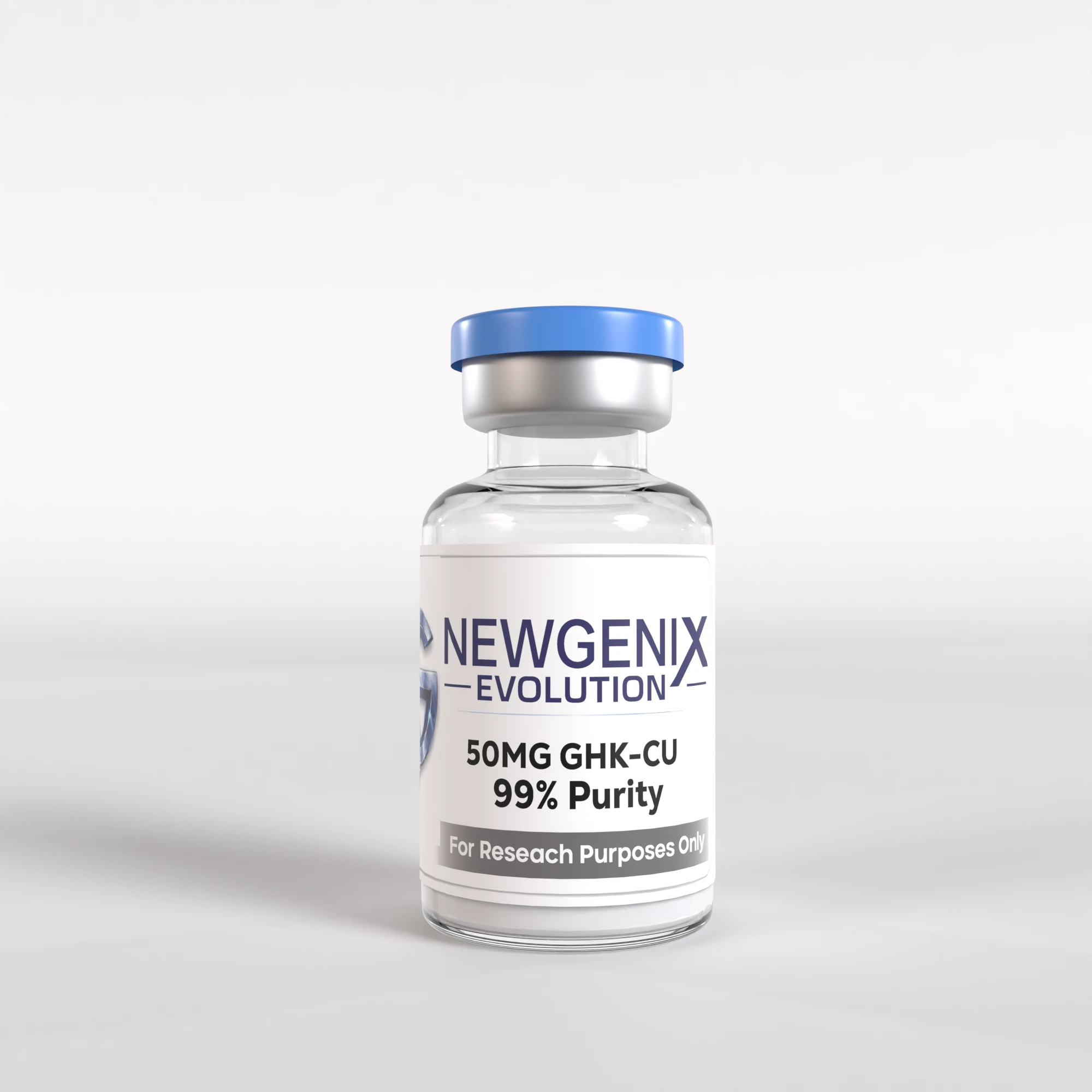
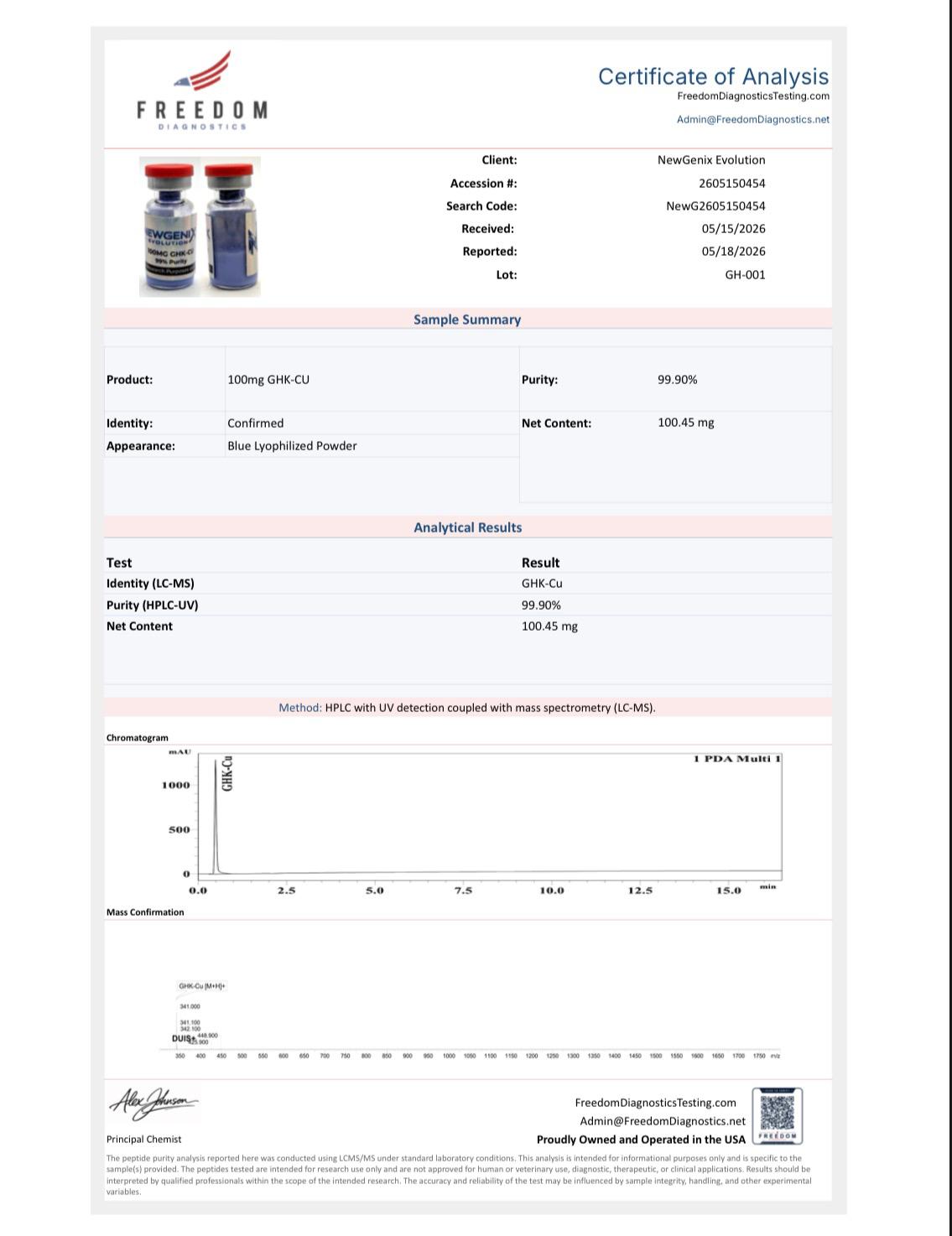

GHK-CU
GHK-CU (Glycyl-L-Histidyl-L-Lysine Copper Complex) is a research-use-only peptide that has garnered significant attention in the scientific community for its potential biological interactions and effects in vitro and in animal models. This peptide is derived from the native sequence found in human blood plasma and has been studied for its potential role in cellular processes under controlled research conditions.
Research Context
GHK-CU is a copper-binding peptide that was first isolated from human plasma in the early 1990s. It consists of three amino acids (glycine, histidine, and lysine) with a copper ion that facilitates its biological activity. Research has primarily focused on its potential cellular mechanisms, including effects on cell signaling pathways, extracellular matrix remodeling, and interactions with cellular receptors.
Research Overview
Studies on GHK-CU have explored its influence on various biological functions within laboratory settings. The peptide has been investigated for its ability to modulate cellular processes such as wound healing, extracellular matrix deposition, and interactions with cell surface receptors. In vitro and in vivo research has emphasized its potential roles in tissue repair and cellular homeostasis, although these findings are typically limited to experimental conditions that do not translate directly to human or animal therapeutic applications.
Key Research Focus Areas
- Cellular Signaling and Extracellular Matrix Interactions: GHK-CU has been studied for its role in signaling pathways that influence extracellular matrix (ECM) deposition and remodeling, particularly in contexts such as wound healing and fibrosis.
- Wound Healing: Investigations in animal models have explored GHK-CU’s potential effects on wound repair, including its ability to stimulate collagen deposition and tissue regeneration under controlled experimental conditions.
- Copper Complex Formation and Biological Activity: Research has focused on understanding how copper binding to GHK-CU influences its cellular uptake, stability, and subsequent biological effects within in vitro and animal models.
- Genetic and Molecular Interactions: Studies have examined GHK-CU’s interactions with specific cell receptors and signaling molecules, such as integrins and growth factor receptors, to elucidate its mechanisms of action in cellular environments.
It is essential to note that all research involving GHK-CU is conducted under strict research-use-only protocols and is not intended for human or animal consumption. Results observed in laboratory settings or animal models may not be applicable or reproducible in clinical or practical settings outside controlled scientific investigations.
Important Compliance Statement
This product is intended solely for research purposes and is not approved for human or animal consumption. GHK-CU 50MG must be handled and used strictly in accordance with applicable laboratory protocols and regulatory guidelines. Misuse or distribution outside of a licensed research context is strictly prohibited.
For research use only. Not for human or animal consumption.
| Size | 50MG, 100MG |
|---|

Reviews
There are no reviews yet.